
The CHC42315 Certificate IV in Chaplaincy and Pastoral Care includes 100 hours of practical work experience, completed within the unit CHCPAS004 (Provide Pastoral and Spiritual Care). You arrange the placement yourself in a setting of your choice, and it can be done as a volunteer or in paid work. It is how you turn what you learn in the course into real pastoral care practice. Here is what counts, where to do it, and how to log your hours.
In this article
- What is the 100-hour placement?
- Does it have to be paid, or can it be volunteer?
- Where can you do your placement?
- What actually counts as placement hours?
- How to find and set up a placement
- How to log and evidence your hours
- Frequently asked questions
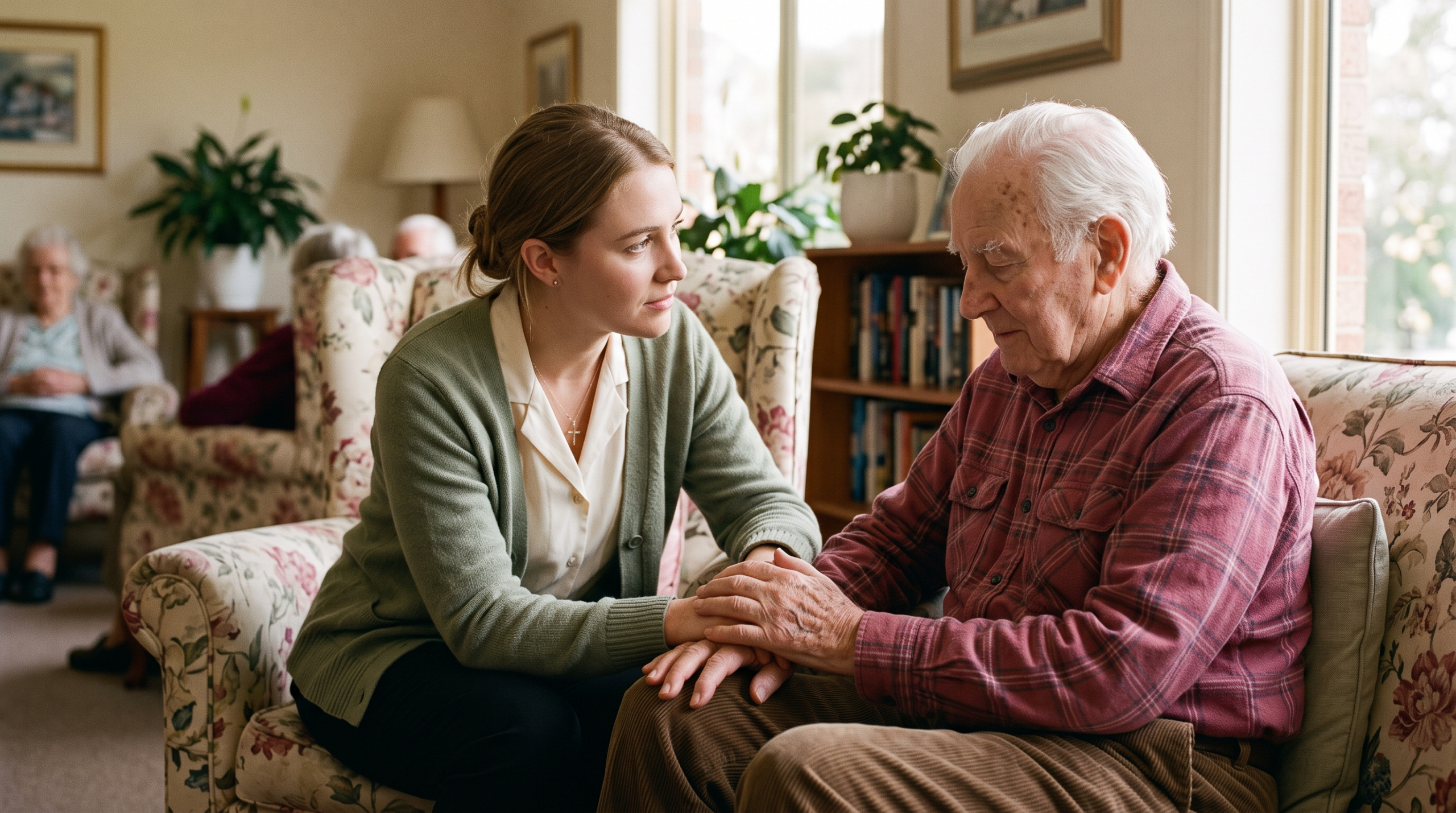
What is the 100-hour placement?
The placement is a practical work experience component built into the qualification. To be assessed as competent in the unit CHCPAS004, you need to show evidence of 100 hours of pastoral and spiritual care experience that meets the requirements of the unit. In plain terms, it is time spent actually supporting people, not just reading about how to.
It exists because chaplaincy is a hands-on, human role. Employers and organisations want to know you have sat with real people in real situations, and the placement gives you that experience, plus the confidence that comes with it, before you step into a role.
Does it have to be paid, or can it be volunteer?
Either works. The 100 hours can be completed as a volunteer or as a paid employee, whichever suits your situation. Most students complete their hours through volunteering, which is often the easiest way to get started and a natural fit for the caring nature of the role. If you already work or volunteer in a suitable setting, those hours may count, so it is always worth checking with your trainer first.

Where can you do your placement?
You arrange your placement in an area that interests you, and chaplaincy fits an unusually wide range of settings. Common options include:
| Setting | What placement might look like |
|---|---|
| Aged care | Sitting with residents, supporting loneliness, end-of-life and grief |
| Hospitals | Being a calm presence for patients and families |
| Schools | Supporting student wellbeing as a trusted adult |
| Faith communities | Pastoral care within a church or community of faith |
| Community services | Supporting people through hardship at community organisations |
| Other settings | Disability services, hospice, correctional or emergency services |
Not sure which setting suits you? Our guide on how to become a chaplain in Australia walks through where chaplains work and why demand is growing.
What actually counts as placement hours?
The hours need to involve genuine pastoral and spiritual care, the kind of work the unit is about: being present with people, listening, offering emotional and spiritual support, and respecting each person’s beliefs. Purely administrative tasks on their own do not count, but the real work of caring for people does.
Your placement should be supervised or supported by the host organisation, and your trainer will confirm that your chosen setting and activities meet the unit’s requirements before you begin, so there are no surprises later.

How to find and set up a placement
Setting up your placement is simpler than it sounds. A typical path looks like this:
- Choose a setting that interests you, ideally one you already have some connection to.
- Approach the organisation and ask about volunteering or work experience in a pastoral care capacity.
- Confirm it fits by checking with your trainer that the role meets the unit requirements.
- Sort any checks the setting requires, such as a working with children check or police check.
- Arrange supervision and start logging your hours as you go.
If you are not sure where to start, your Rose Training course advisor and trainer can help you think it through.
Note that you are not necessarily looking for a role that positions you as a ‘Chaplain’, that comes later with the qualification. The aim is to meet the unit criteria, which will not only improve your training but will also help show your assessor that you understand what is involved with chaplaincy and pastoral care.
CHC42315 Certificate IV in Chaplaincy and Pastoral Care
Study online and self-paced with optional live Zoom classes and one-on-one trainer support, including help planning your placement.
How to log and evidence your hours
You will need to keep a record of your 100 hours to submit as evidence. In practice that means a simple log of dates, hours and what you did, usually confirmed by your placement supervisor. Many students also keep a short reflection on what they learned from key moments, which deepens the learning and helps with the related unit on reflecting on your own practice.
Rose Training gives you the templates and guidance for this, so you are not left guessing what to record or how.
Frequently asked questions
Do you have to complete a placement to finish the Cert IV in Chaplaincy?
Yes. The 100 hours of practical experience are part of the unit CHCPAS004 and are required to complete the qualification. It is a core part of becoming a competent chaplain.
Can my current job or volunteering count towards the hours?
Possibly. If you already work or volunteer in a pastoral care setting, those hours may count. Check with your trainer to confirm the role and activities meet the unit requirements.
Do I need a working with children check or police check?
It depends on the setting. Placements in schools and many community organisations require relevant background checks, which are arranged through the host organisation rather than the course.
How long does 100 hours take to complete?
That is up to you and your placement. Spread over a few hours a week it can fit comfortably within your 12 months of study, and you can often begin once your trainer confirms your setting.
Does Rose Training help me arrange my placement?
Yes. Your trainer and course advisor help you choose a suitable setting, confirm it meets the requirements, and give you the templates to log your hours.
Ready to start your chaplaincy journey?
Study the nationally recognised Certificate IV in Chaplaincy and Pastoral Care online, with real trainer support to help you plan and complete your placement.
Nationally recognised training. Payment plans available.